The short version
- Winter: about 68°F while you are home and awake, lower while you sleep or are out.
- A 7–10°F setback for 8 hours a day can save up to 10% a year on heating and cooling, per the US Department of Energy.
- The furnace does not 'work harder' to catch up. A cooler house loses less heat, full stop.
- With a heat pump, keep setbacks small (2–4°F) unless your thermostat manages recovery for heat pumps.
In most homes, heating and cooling are the largest single part of the energy bill. That makes the thermostat the most powerful money control you own, and it costs nothing to use. The trouble is that it comes wrapped in folklore. Some people swear that turning the heat down at night costs more in the morning. Others crank it to 85°F expecting the house to warm faster. Neither is true, and the reason is worth two minutes.
Why a cooler house saves money
Your house leaks heat all the time, through walls, windows, the roof and every gap around them. The speed of that leak depends on the temperature difference between inside and outside. At 70°F inside and 30°F outside, the gap is 40 degrees. Drop the inside to 62°F and the gap shrinks to 32 degrees, so the house loses heat more slowly for every hour it sits there.
When the thermostat comes back up in the morning, the furnace replaces the heat that was lost overnight. Because less was lost, less needs to be replaced. The Department of Energy puts it plainly: a lower interior temperature slows heat loss, so the longer your house stays cooler, the more you save.
The furnace does not work harder to catch up. It simply puts back less heat than you would have leaked by keeping the house warm all night.
The settings the Department of Energy suggests
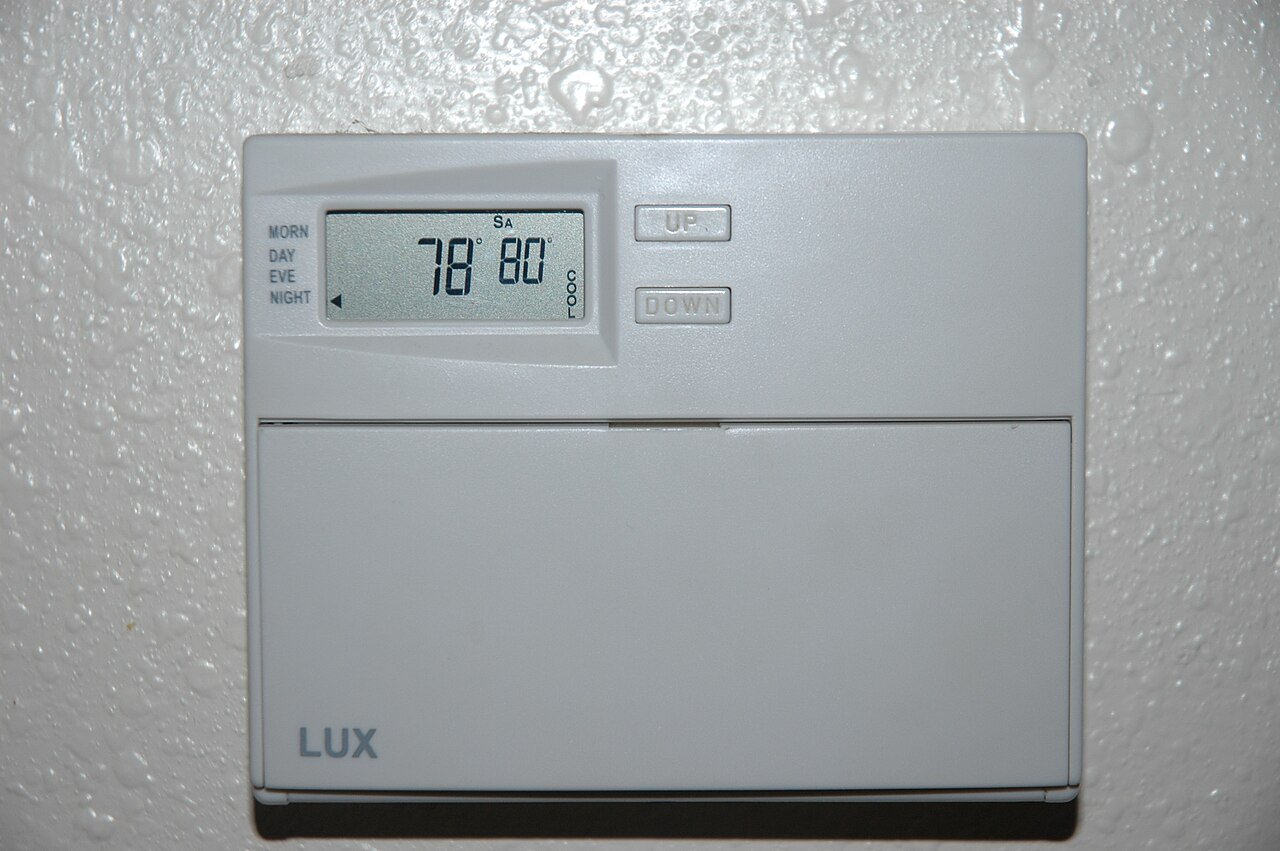
In winter, the DOE suggests about 68°F while you are awake and at home, and setting it lower while you are asleep or out. In summer it suggests 78°F when you are home and need cooling, and higher when you are away.
The headline figure is this: according to the DOE, you can save as much as 10% a year on heating and cooling by turning your thermostat back 7–10°F from its normal setting for 8 hours a day. A nightly setback while you sleep covers those 8 hours without you noticing.
Work out your own savings
The DOE figure works out to a handy rule of thumb: roughly 1% of your heating cost for each degree of setback held for 8 hours. It is an approximation. Homes in colder climates, and leakier homes, tend to save a bit more. Enter your yearly heating cost below to see what it means for you.
Thermostat setback estimator
Uses the Department of Energy rule of thumb: about 1% of heating cost saved per degree, per 8 hours of setback.
A household spending $1,200 a year on heat that drops the thermostat 8°F every night for 8 hours would save around 8%, or about $96 a year. Do that for a decade and it is close to a thousand dollars for a change you make once in the thermostat's schedule.
Heat pumps play by different rules
Everything above holds for furnaces and boilers. Heat pumps are different, and this is where well-meaning advice goes wrong.
Most heat pumps have a backup: electric resistance strips that switch on when the heat pump cannot keep up. Those strips are expensive to run, often two to three times the cost of the heat pump itself for the same heat. A big morning recovery from a deep setback is exactly the situation that can trigger them.
So with a heat pump, keep setbacks modest, around 2–4°F, or use a thermostat with a heat pump mode that recovers slowly and locks out the backup strips except in real cold. Many smart thermostats offer this. Check the settings under the name of your system type. For more on how they work, see our guide to whether heat pumps are worth it.
Programmable and smart thermostats
A setback only saves money if it happens every night, and nobody remembers to do that by hand. A programmable thermostat runs the schedule for you. A smart thermostat goes further, learning when you leave and come home, and showing your runtime history in an app.
ENERGY STAR says certified smart thermostats save about 8% on heating and cooling bills on average. If you already run a careful schedule on a programmable unit, you will see less than that. If your current thermostat sits at one temperature all year, you will likely see more.
Check with your utility before buying. Many offer rebates on certified smart thermostats, and some pay you a small credit to let them nudge your settings during peak demand days.
Small things that change how warm you feel
Comfort is not only the number on the screen. A few cheap habits let you live with a lower setting:
- Check where the thermostat sits. A thermostat in direct sun, near a lamp or above a heating vent reads warm and shuts the heat off early. One near a drafty door does the reverse. The DOE recommends an interior wall away from all of these.
- Run ceiling fans in reverse in winter. On low and turning clockwise, a fan pushes warm air down from the ceiling without creating a breeze.
- Use the fan in summer. The DOE says a ceiling fan lets you raise the thermostat about 4°F with no loss of comfort. Turn it off when you leave the room, since fans cool people, not rooms.
- Close curtains at night, open them on sunny days. Free solar heat through south-facing windows is real heat.
- Deal with drafts. A cold draft makes 68°F feel like 64°F. Sealing the worst leaks is covered in our insulation guide.
Myths worth dropping
"Turning it way up heats the house faster"
Most furnaces deliver heat at one fixed rate. Setting 85°F does not make the air come out hotter. It only means the system keeps running past the temperature you wanted, and you pay for the overshoot.
"Closing vents in empty rooms saves money"
With central forced air, closing vents can raise pressure in the ducts, increase leakage and make the system less efficient. Close a door to an unused room if you like, but leave the vents mostly open unless an HVAC professional says otherwise.
"A setback is bad for the furnace"
A furnace that runs a longer cycle in the morning is doing what it was built to do. Short, frequent cycles are harder on equipment than one longer recovery.
Questions people ask
What is the most energy-efficient thermostat setting in winter?
The Department of Energy suggests about 68°F while you are awake and home, and setting it lower while you sleep or are away. Every degree lower saves energy, so the best setting is the lowest one you are comfortable with.
Is it cheaper to leave the heat on all day?
No, for furnaces and boilers. Your house loses heat faster the warmer it is inside compared to outside, so keeping it cooler while you are out means less total heat lost. The energy needed to warm it back up is smaller than what you saved.
Should I turn my heat pump down at night?
Only a little, unless your thermostat is designed for heat pumps. A large setback can make the system call for its backup electric resistance heat when it recovers in the morning, which can wipe out the savings.
What should I set my thermostat to in summer?
The Department of Energy suggests 78°F when you are home and need cooling, and higher when you are away. A ceiling fan lets most people raise the setting about 4°F with no loss of comfort.
Sources
Numbers on this page are estimates built on the stated assumptions. Your rates, climate and home will change them, so plug in your own figures. Nothing here is financial or professional advice.